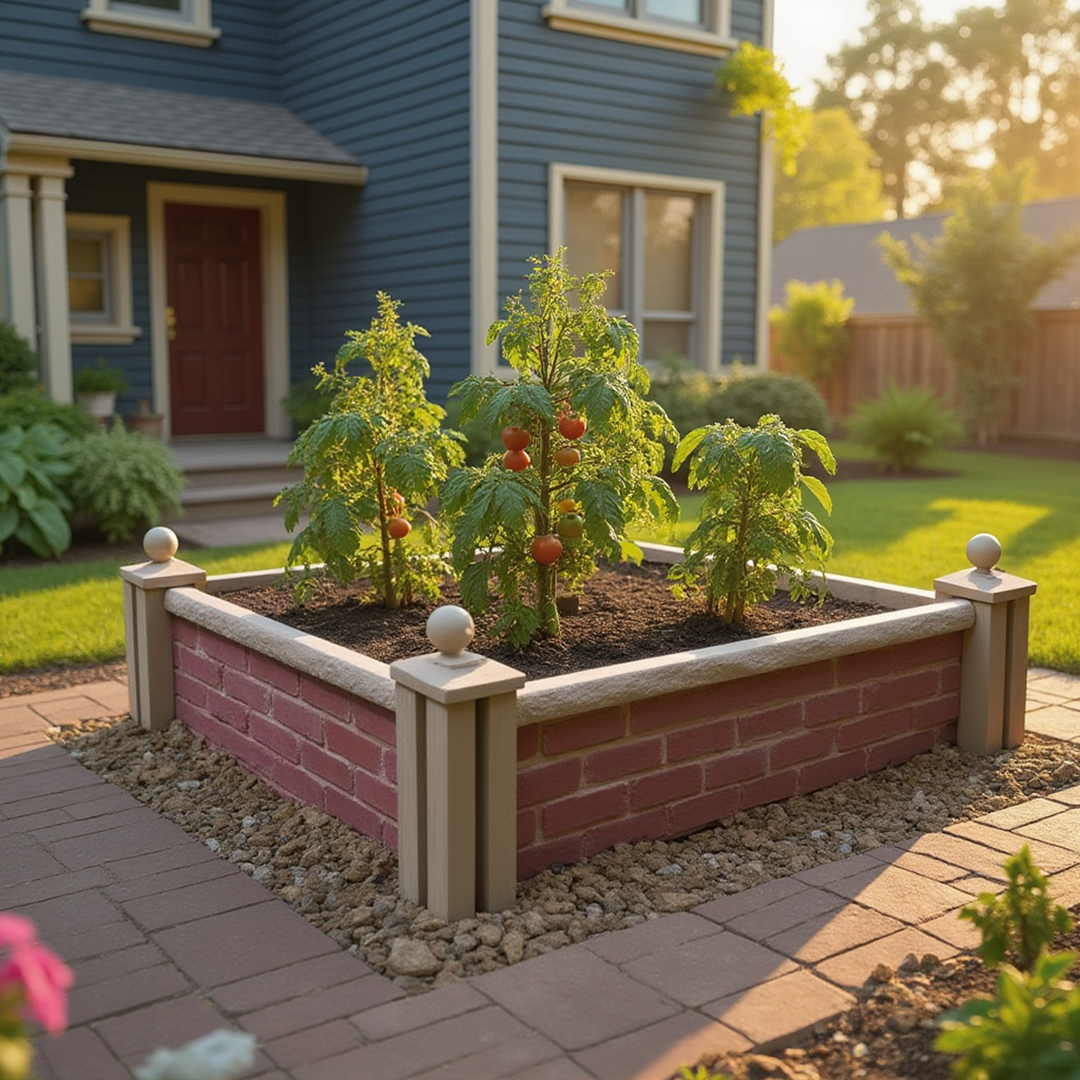

How to Choose a Retaining Wall That Outlives Your Mortgage
Your neighbor's timber wall is leaning. Yours will too, on schedule.
Timber retaining walls start rotting from the inside around year eight. By year twelve they lean, then bow, then let the slope behind them push through. The homeowner who installed it did nothing wrong except pick the material on price.
That is the trap this guide is built to keep you out of.
Retaining wall failure is not bad luck. It is predictable from the material chosen on day one. Choose right the first time and the wall outlives the mortgage. Choose on sticker price and you pay for the same wall two or three more times.
Here is how to make the decision once.
Decide first whether your wall is structural or decorative
Before material, before cost, answer one question. Is this wall holding back a slope, or is it edging a flat bed for looks?
A decorative border sits under 12 inches and retains almost nothing. If it fails, you have a cosmetic problem and a weekend fix.
A structural retaining wall holds soil in place. Anything over 18 inches that is stopping a grade from moving is doing real structural work. If it fails, you get erosion, water pooling against your foundation, and a repair bill that dwarfs the original job.
The line sits around that 12 to 18 inch band. Below it, landscaping intuition is fine. Above it, you need to think like the wall is load-bearing, because it is.
Most homeowners skip this step and shop for a look. That is backwards. The job the wall has to do decides everything downstream.
Rank the five materials by how long they actually last
Here is the honest hierarchy in a freeze-thaw climate, worst to best.
Timber. Eight to twelve years before rot and lean. Cheapest to install, most expensive to own, because you buy it again. Ground contact plus moisture is exactly what wood is worst at surviving.
Standard poured concrete. Cracks within five to ten years in northern climates without serious reinforcement. Water gets into micro-cracks, freezes, expands, and widens them every winter until the wall spalls.
Concrete block and CMU. Thirty to fifty years, but with a tax. Water infiltrates the mortar joints, freezes, and blows the joints apart over time. You inspect for joint separation and staining, and you repoint every ten to fifteen years to hit the top of that range.
Natural stone. Effectively indefinite if it is built right, which is the catch. Dry-stacked or mortared stone demands real drainage engineering and skilled labor, and the cost reflects it.
GFRC. Fifty-plus years with no staining, no joint separation, and no surface treatment. Glass fiber reinforced concrete uses a dense, polymer-modified matrix that blocks water penetration instead of absorbing it.
Notice the pattern. The materials that fail fastest are the ones that let water in. Everything about retaining wall lifespan comes back to what happens when water meets cold.
Understand why freeze-thaw is the real killer
Water expands about nine percent when it freezes. That number is the whole story.
Timber absorbs moisture and rots from the core outward, so the failure is invisible until the lean shows up. CMU takes on water at the joints, and each freeze pries the mortar a little further apart. Standard concrete develops hairline cracks that widen every single winter until the face breaks off.
The material either keeps water out or it does not. That is the entire test.
This is where GFRC separates from the pack. Homebridge tests its material to ASTM C666, the standard freeze-thaw durability protocol, running samples through hundreds of rapid freeze and thaw cycles to measure degradation. The same data that proves the fire pit tables survive a Michigan winter proves the retaining walls will too.
That testing is not a marketing line. Anthony Bango, who founded Homebridge in 2019 after forty years in commercial construction, ran GFRC through three real Michigan winters before selling a single panel. He knew what the cheaper materials were built to do, and he refused to ship until the material cleared the standard the rest of the industry avoids.
💡 Ask any manufacturer for their ASTM C666 freeze-thaw data. If they cannot give you a number, the material was not built for your winters.
Get the height, drainage, and permit details right
These four numbers decide whether a structural wall holds or fails.
Height. Height determines whether the wall is decorative or structural, and it triggers permits. In most municipalities a wall over four feet requires an engineered plan and a permit. Skipping that is how DIY projects turn into stop-work orders.
Drainage. A retaining wall without drainage is a pressure vessel. Water builds behind it, saturates the soil, and pushes with force the wall was never rated for. You need gravel backfill and a perforated drainage pipe at the base, running water away from the structure. This single detail causes more blowouts than any material choice.
Backfill. Compacted gravel behind the wall, not the native clay you dug out. Clay holds water. Gravel lets it move to the drain.
Base. A level, compacted base course. A wall built on soft or uneven ground telegraphs that flaw straight up the face within a season.
Get drainage wrong with the best material on earth and the wall still fails. Get it right and even a mid-tier material buys you years.
Run the real cost math over 25 years
Sticker price is the number that fools people. Total ownership cost over the life of the yard is the number that matters.
Walk it out over 25 years.
Timber installs cheap, around fifteen to twenty-five dollars per square foot. Then it fails at year ten, and again near year twenty. That is three purchase-and-install cycles for one wall. The cheap option is the most expensive one on the wall.
CMU block costs more upfront and adds repointing every ten to fifteen years, plus staining you either clean or live with. Two or three maintenance cycles across the same window.
GFRC installs once. No maintenance cycle, no replacement, no repointing, no sealing. Homebridge GFRC achieves compressive strength of 8,000 to 12,500 psi depending on mix specification. The denser Minnesota-spec mix reaches 12,500 psi, while the lighter formulation delivers roughly 8,000 psi at about 30 percent less weight, which makes the panels easier to set without heavy equipment.
The math is the same one that holds for every Homebridge product. Pay once for the material that lasts, or pay repeatedly for the material that does not.
Make the decision once
Retaining walls fail on a schedule written the day the material is chosen. Timber and unreinforced concrete are on a clock. Block buys time and asks for maintenance. GFRC is built to be installed and forgotten.
Start with the job the wall has to do. Match the material to your climate, not your budget. Get the drainage right no matter what you pick.
Do that, and you build the wall once. Your neighbor rebuilds theirs while yours holds the line.