Introducing a New Product That Will Distinguish Your Designs, Install in Less Than Half the Time, and Last for Decades
I spent forty years as an estimator in the construction industry. I've priced thousands of retaining wall projects. I've watched crews struggle with stacked blocks, weather delays, and the inevitable timeline creep that makes accurate bidding feel like guesswork.
Here's what nobody talks about: labor makes up 40% to 60% of total retaining wall project costs, according to recent industry data. That variability alone should tell you something is broken in how we build these structures.
Most retaining wall installations take one to three weeks. But timelines stretch when weather hits, when permits delay, when soil conditions surprise you. Contractors charge $75 to $90 per hour, and homeowners pay $35 to $65 per square foot on average. The system works, technically. But it works slowly.
I founded Homebridge Precast in 2019 because I saw a different way forward. Not just incrementally better. Fundamentally different.
The Problem With How We've Always Done It
Traditional stacking block systems require multiple pallets cluttering your job site. You need four to six people on crew. You stack blocks one by one, gluing each layer together. The process is methodical, proven, and painfully slow.
The construction industry resists change for good reason. When you're good at something, switching feels risky. Hardscapers have built entire business models around these methods. Their crews know the workflow. Their pricing reflects the labor hours. Their equipment is optimized for stacking.
But here's the uncomfortable truth: about 30% of retaining walls fail within a few years of installation, often from drainage problems, inadequate reinforcement, or poor construction practices, according to industry analysis.
The American Society of Civil Engineers reports that bad design or poor maintenance leads to thousands of property damage cases annually, totaling around $200 million in damages.
Freeze-thaw cycles crack traditional concrete blocks. Saturated soil weighs up to 50% more than dry soil, creating hydrostatic pressure that builds with every rainfall. When drainage clogs—and it does—the force behind your wall increases dramatically.
These aren't edge cases. These are predictable failure modes that the industry has accepted as normal.
What Three Years of Testing Revealed
I didn't start with a product. I started with a problem. Introducing the Garden Retaining Wall System TM
Our modular culvert wall systems worked well, but we needed something structurally independent. No struts. No sidewalls. A wall system that could stand alone while installing faster than anything on the market.
The solution came from an unexpected place: mini-piles.
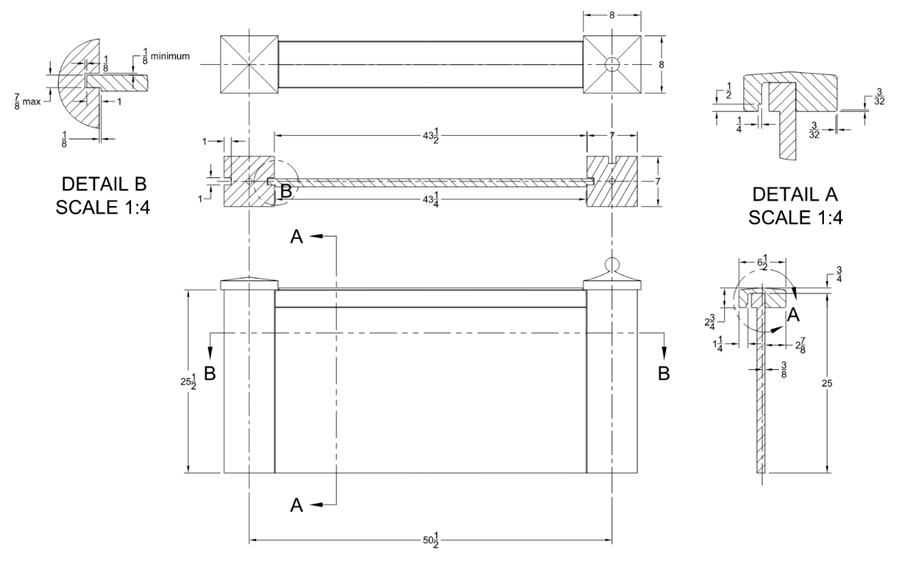
These are galvanized ground pipes driven a minimum of 36 inches below grade. They tie directly into posts, which then support the wall panels. The entire system is structurally independent, but unlike stacking blocks, it goes up in a fraction of the time.
We spent three years testing in residential environments around Ann Arbor, Michigan. We drove mini-piles through asphalt. We tested different soil conditions. We installed walls in real backyards and watched how they performed through multiple freeze-thaw cycles.
The result: our system installs in one-fifth the time of traditional stacking blocks.
A 24-inch high retaining wall that normally takes a week? We can complete it in one day. That's not marketing talk. That's what happens when you eliminate mortar joints, traditional strip footings, and extensive excavation.
The Engineering Truth Behind GFRC
We build our Garden Retaining Wall System from GFRC—Glass Fiber Reinforced Concrete. This isn't fiberglass. It's an entirely different material with performance characteristics that matter in real-world applications.
Our panels achieve 12,000 psi compressive strength and over 2,000 psi flexural strength. Standard concrete delivers 3,000 to 5,000 psi compressive strength. GFRC demonstrates compressive strengths ranging from 6,000 to 12,000 psi and flexural strength of 20–30 MPa, far surpassing conventional concrete's 5–8 MPa range, according to material testing data.
GFRC is nearly 75% lighter than standard concrete. That weight reduction matters when you're moving panels around a job site. It matters when you're calculating transportation costs. It matters when you're trying to install a wall with three people instead of six.
The material resists freeze-thaw cycles according to ASTM C666 procedures. Low porosity and a flexible fiber network prevent the cracking that plagues traditional concrete blocks. We've tested this through multiple Michigan winters. The panels don't crack.
Tensile strength ranges from 1,500 to 3,500 psi—two to three times higher than typical unreinforced concrete. When soil pressure builds behind your wall, that tensile strength is what keeps the structure intact.
How Installation Actually Works
I've been doing lunch-and-learns with local hardscape firms around Ann Arbor. We erect the Garden Retaining Wall System right in their parking lots. No mini-piles through the asphalt, but we stand the system up so they can see exactly how it works.
The reaction has been consistent: this is different from anything they've seen.
Here's the installation process:
Step 1: Drive the mini-pile. We use a gasoline-powered post driver with a Honda engine. The mini-pile goes 36 inches into the ground in less than five minutes. It'll go through asphalt if needed. The pile anchors the entire system.
Step 2: Set the post. The post slides over the mini-pile. You level it, secure it, and you're ready for the first panel.
Step 3: Attach the panel. The GFRC wall panel connects to the post. You snuggle up the next post exactly where it needs to be, drive another mini-pile, and keep moving down the line.
Two people install the wall and posts. Two more feed the project by bringing over panels and columns, setting them out ahead of the installation team. You can complete 100 feet of wall with three or four people total.
Compare that to traditional methods requiring four to six people for multiple days.
The panels come in 48-inch lengths. You can create curvilinear walls by expanding the slot in the post to achieve the proper angle. People see straight panels and assume you can't do radius corners. That assumption is wrong. The system handles curves just fine.
Design Options Nobody Expected
When I started this company, I looked at what homeowners and contractors actually had available for planter beds and garden retaining walls. The options were limited: brown blocks, gray blocks, or red blocks with some black mixed in to approximate stone.
You could hire a mason to build a custom stack stone wall. That would cost five to ten times what our system costs. Most people can't justify that expense for a garden bed.
We offer four finish options:
Plain limestone for a clean, classic look that works with traditional landscapes.
Stack stone that mimics premium stone masonry without the premium price or installation time.
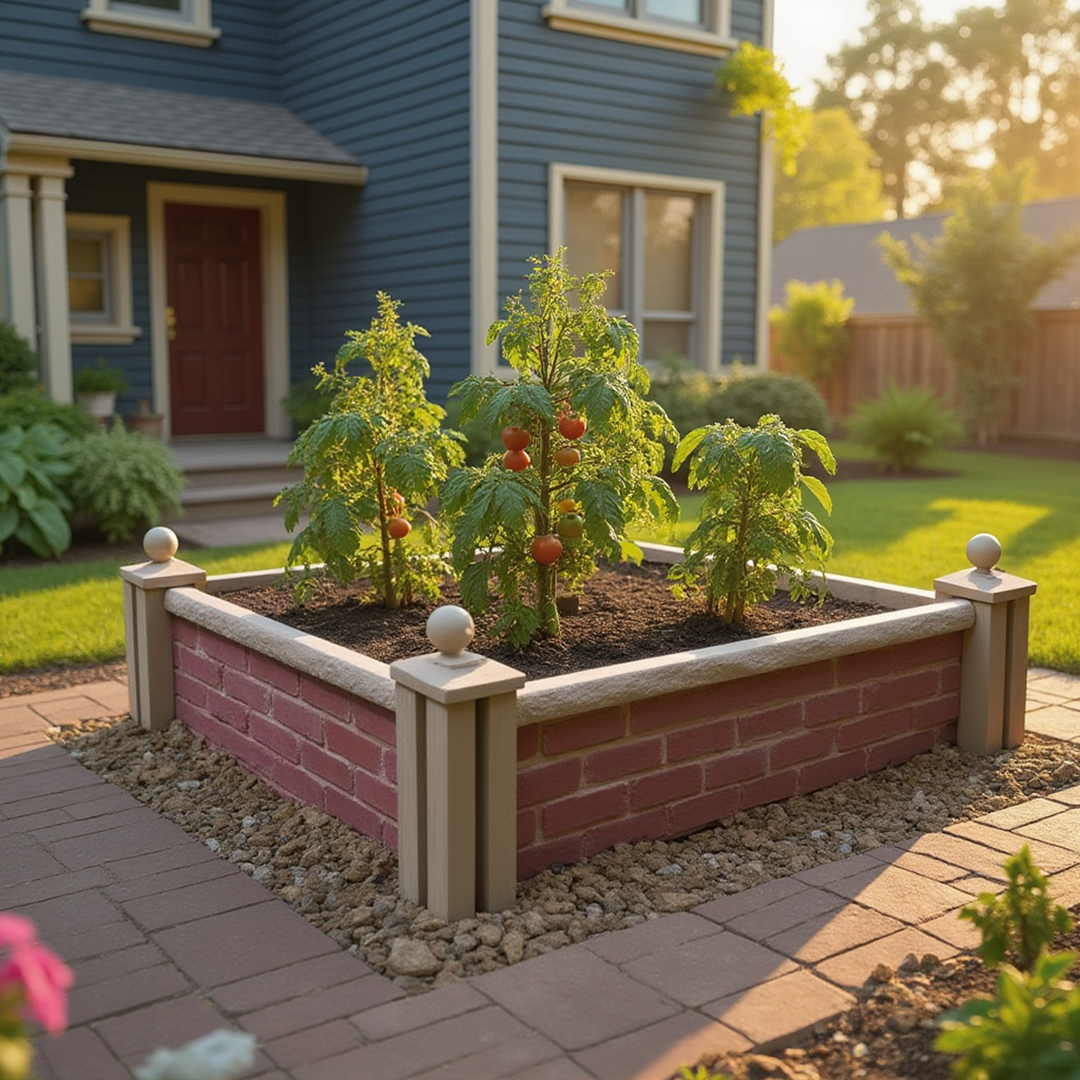
Red brick running bond veneer for properties where brick complements the architectural style.
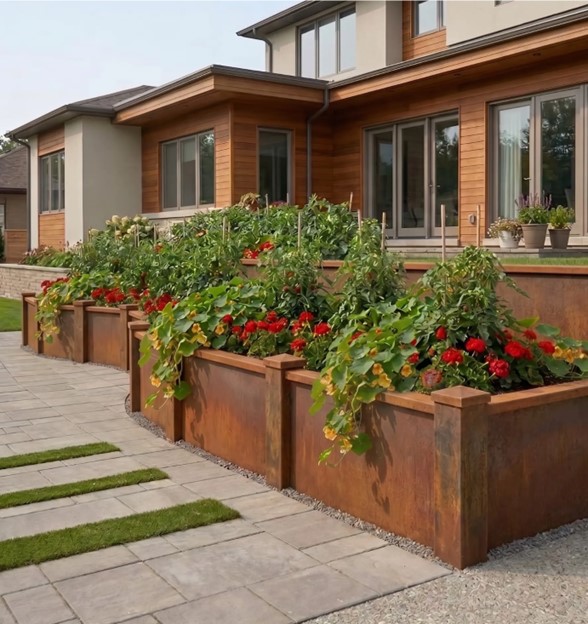
Corten steel appearance for contemporary designs. It's not actual steel—it's concrete—so it doesn't leach onto pavements. But it delivers that modern industrial aesthetic that designers want.
The aesthetic flexibility is what catches the eye of landscape architects and designers. These are people looking for new options that make their designs better than what they imagined.
Why the Industry Hasn't Moved Faster
McKinsey & Company predicts potential cost savings of up to 20% through productivity boosts from modular construction methods. Modular construction can reduce project timelines by 20% to 50% compared to traditional approaches.
A 2025 analysis found that modular building can cut construction times by up to 50%, lower costs by up to 20%, and reduce emissions by roughly 22%. The Construction Industry Training Board reports that modular projects typically achieve an 80% reduction in on-site labor.
The data is clear. The benefits are proven. So why hasn't the construction industry moved faster?
The industry is capital-intensive and relies heavily on manual labor and conventional machinery. When you've invested in equipment, trained crews, and built pricing models around a specific method, change represents risk.
Hardscapers are people who know how to do things very well. They don't like change because they view it as risk. They worry about trying something new that doesn't work. They need to see early adopters install successfully before they're willing to give it a try.
That's why we're targeting award-winning designers and landscape architects who appear on the front pages of magazines. These are innovators who've already proven they're willing to take risks on new approaches. When they install our system successfully, word spreads. Risk perception shifts.
Soil Conditions You Can't Ignore
During our testing in Ann Arbor, we didn't encounter major soil issues. The residential areas where we installed have decent bearing capacity below the top organic layer. That's where the mini-piles actually grip.
But I'm very clear about edge cases where this system won't work.
If you're trying to erect this in a bog, next to a river, or in areas with standing water, you'll have problems. Highly expansive or saturated soils aren't suitable. The installation guide spells this out explicitly and helps identify soil types before you start.
Drainage remains the number one failure point for any retaining wall system. Waterlogged soil weighs up to 50% more than dry soil. Using improper backfill materials like clay or expansive soils leads to poor drainage and increased hydrostatic pressure behind the wall.
Foundation settlement or slope movement occurs when weak, loose, or compressible soils beneath the wall can't support the load. The type of soil behind and beneath the wall plays a critical role in longevity.
Our system doesn't magically solve bad soil conditions. But it does eliminate many of the installation variables that lead to improper drainage or inadequate structural support.
What Needs to Change
The industry has accepted that pavements, walls, fireplaces, and planters must be built from stacked blocks or bricks. That's just how construction works. It's been working alright for decades.
But there are other ways to do it.
Prefabricated lightweight panels can go up in a fraction of the time. They can deliver superior structural performance. They can offer aesthetic options that traditional methods can't match at comparable price points.
The assumption that construction has to be slow, labor-intensive, and built piece-by-piece on site is exactly that: an assumption.
When we scale this system, contractors will look at their labor allocations in a totally different way. They'll realize they don't need to put a crew of four to six people on every retaining wall project. They can complete installations faster, take on more projects, and offer clients something genuinely different.
Some people won't believe how fast it goes until they see it themselves. That's fine. I've been in construction long enough to know that seeing is believing.
We're just now bringing this to market after three years of testing. The early adopters will install it successfully. Others will watch, evaluate, and eventually try it themselves.
That's how innovation moves through an industry that values proven performance over promises.
What This Means for Your Next Project
If you're a homeowner planning a garden retaining wall, you now have an option that installs in one day instead of one week. You get GFRC panels that won't crack through freeze-thaw cycles. You choose from four finish options that look like premium materials without the premium installation cost.
If you're a landscape contractor, you can offer clients something your competitors don't have. You can reduce crew size, shorten project timelines, and improve your labor efficiency. You can take on projects that previously weren't profitable because the installation time ate your margins.
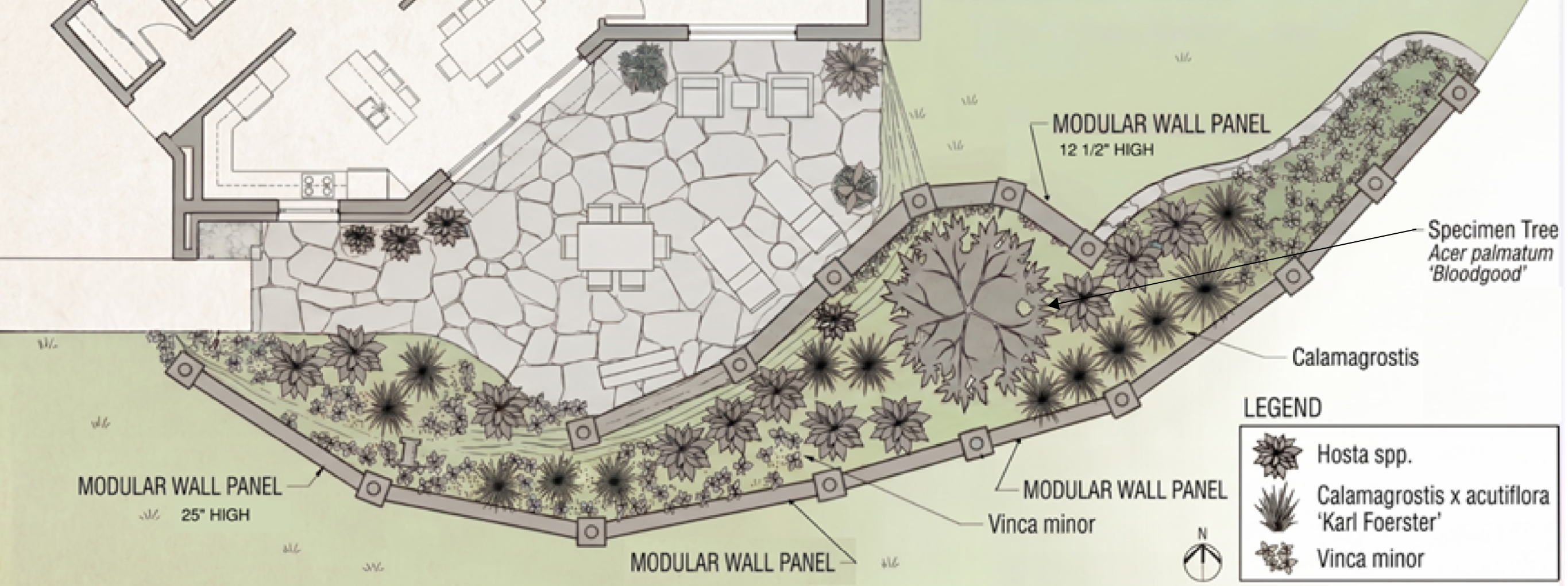
If you're a landscape architect or designer, you can specify a system that delivers the aesthetic you want without compromising on structural performance or installation practicality. You can create curvilinear designs with segmented panels. You can integrate retaining walls into landscape plans without the visual limitations of standard stacking blocks.
The Homebridge Garden Retaining Wall System isn't just another retaining wall product. It's a different approach to a problem the industry has been solving the same way for decades.
Sometimes the best innovation isn't the flashiest technology. It's the solution that makes the work faster, better, and more accessible to the people who actually need it.
That's what we built. That's what three years of testing proved. That's what we're bringing to market now.