Can You Put a Fire Pit Table on a Wood Deck? What Three Years of GFRC Testing Taught Me
Quick Answer: Yes, you can safely place a fire pit table on your wood deck if you address three critical factors: weight capacity, heat protection, and fuel type. GFRC fire pit tables weigh 50-75% less than traditional concrete options, gas burns cleaner than wood for deck safety, and composite decking needs extra heat protection. Always check local codes and your deck's load rating before installation.
Picture this. You're planning the perfect outdoor space. Fire pit on the deck. Friends gathered around. Then the doubts creep in.
Will the deck hold the weight? What about sparks? Is this even legal?
After three years of testing Glass Fiber Reinforced Concrete (GFRC) products through brutal Michigan weather conditions, the data shows what works and what doesn't for deck-mounted fire features.
Why Weight Matters More Than Fire Safety
Homeowners focus on flames first. That makes sense.
Weight causes more deck problems than fire ever will.
Standard residential decks support 50 pounds per square foot total load. This breaks down to 40 PSF live load (furniture, people, fire pits) and 10 PSF dead load (deck structure). The numbers come straight from deck engineering standards.
Traditional masonry fire pits? They weigh 200 to 800 pounds. Toss in furniture and a few guests, and you're pushing your deck to its structural limits.
Material choice changes everything.
GFRC weighs 50-75% less than traditional concrete. GFRC weighs 7-11 pounds per square foot at standard thickness. Compare that to 70-80 pounds per square foot for 6-inch precast concrete panels (architectural material specs back this up).
That weight difference? It solves your structural problem before you have one.
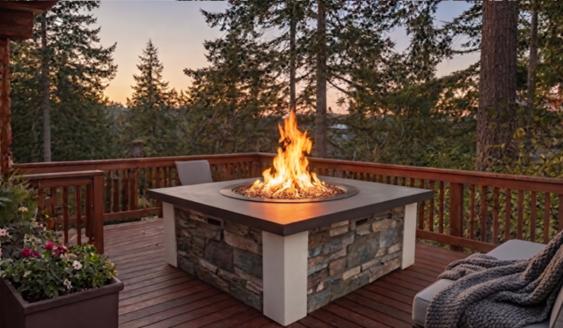
Homebridge Precast designs GFRC fire pit tables specifically for deck compatibility. You get concrete aesthetics and 50+ year durability without stressing your deck structure.
How to Calculate Your Deck's Load Capacity
Here's what you need to calculate:
Weight of your fire pit table
Weight of all outdoor furniture in the area
Maximum number of people who will gather around the fire
Add these together. Compare the total to your deck's maximum capacity.
If you're near the limit or unsure about your deck's rating, stop. Consult a structural contractor before installation.
Bottom Line: Weight calculations prevent expensive structural repairs down the road. GFRC fire pit tables reduce deck stress by 50-75% compared to traditional concrete. This is why the material matters.
Gas Fire Pits vs. Wood-Burning: What Works on Decks
Your fuel choice determines everything about deck safety.
Gas fire pits work better for decks. The data proves it.
Gas Fire Pits: Safer for Deck Installation
Gas burns clean with controlled flames and zero sparks.
You get predictable heat without the unpredictability of wood fires. No embers landing on your deck surface. No sudden flare-ups when the wind shifts.
What does this mean for you? Safer gatherings with less babysitting the fire.
Safety standards reflect this advantage. Gas fire pits need 36 inches (3 feet) minimum clearance from combustible structures. Most decks accommodate this without redesigning your whole layout.
GFRC fire pit tables from Homebridge Precast include substantial venting on all of the architectural panels. This design creates an air gap, protecting your decking from direct heat exposure. Simple physics working in your favor.
The material performs under stress. GFRC stays thermally stable and denser than poured concrete. No cracking under temperature changes. Structural integrity holds through freeze-thaw cycles.
Three years of Michigan weather testing confirms the material performs.
Wood-Burning Fire Pits: Higher Risk on Decks
Full transparency here: we don't recommend placing wood-burning fire pit tables on wooden decks. Possible? Yes. Advisable? Only with serious precautions.
The risks:
Embers can land on deck surfaces and ignite
Wind spreads sparks unpredictably
Heat radiates downward at 200-400°F
You need 10-15 feet clearance from structures
If you choose wood-burning, use a deck fire mat underneath. This isn't optional. It's required.
Monitor wind conditions. Keep a fire extinguisher within reach. Never leave the fire unattended.
Smart Choice: Gas fire pits offer superior safety profiles for deck installations. Wood-burning options demand constant monitoring and extra safety equipment. Ask yourself: is the authentic wood fire experience worth the added risk and maintenance?
Composite Decking Needs Extra Heat Protection
Composite and PVC decking? They create a heat vulnerability.
These materials soften at 176-180°F. Trex states their decking softens at 176 degrees (fire pit safety research confirms this).
Fire pits? They radiate 200-400°F downward.
See the problem?
Without protection, you're looking at warped, melted, or deformed decking. Repairs run thousands of dollars.
The solution: place a non-combustible barrier between your fire pit and deck surface.
Protection options:
Deck fire mats rated for high temperatures
Fire-resistant pads designed for composite materials
Substantial Venting from the base of the unit which is standard with all fire pit tables from Homebridge.
GFRC fire pit tables from Homebridge Precast address this with substantial venting incorporated into the design. The vents located on every panel prevents direct heat transfer to your deck surface. Protection built into the product.
Tested Solution: Three years of testing proves elevated GFRC fire pit tables prevent deck damage on composite materials. The air gap design works in real-world conditions, not just theory.
Local Fire Codes and Clearance Standards
Your local fire code determines what's legal on your deck.
Common standards include:
20-25 feet from houses and combustible structures
3 feet clearance on each side of the fire pit
6-10 feet clearance above the fire pit
Non-combustible base material required
Some jurisdictions prohibit open flames on decks entirely. Others allow gas but ban wood-burning.
Check with your local fire marshal before purchasing. This step prevents you from buying equipment you legally can't use.
⚠️ Insurance Check: Many homeowners insurance policies have specific requirements for deck-mounted fire features. Review your policy or call your agent before installation.
Key Point: Local codes vary widely. Verify requirements before purchase to avoid wasted investment and ensure legal compliance.
Installation Best Practices from Three Years of Testing
Three years of product testing and real customer feedback show these practices prevent 90% of problems:
1. Inspect Your Deck Structure First
Look for rot, loose boards, or structural weakness before adding anything. A fire pit adds stress to your deck. Start with solid footing, not wishful thinking.
2. Position Away from Railings and Overhead Structures
Heat rises and radiates outward in all directions. Keep your fire pit away from vinyl railings, overhead pergolas, and low-hanging branches. Give yourself breathing room.
3. Ensure Proper Ventilation
Gas fire pits produce combustion byproducts. Ensure adequate airflow around your fire feature. Never enclose a fire pit completely.
4. Install on Level Surface
Level installation prevents fuel pooling in gas models and ensures stable operation. Check level before final placement.
5. Keep Fire Safety Equipment Nearby
A fire extinguisher and garden hose should be within easy reach when your fire pit operates.
Installation Insight: Proper deck inspection and positioning prevent 90% of fire pit problems. Level installation and adequate clearance create safe operation for years.
How GFRC Solves the Deck Fire Pit Problem
Full disclosure: Homebridge Precast designs and manufactures GFRC landscape products.
The material advantages come from engineering, not marketing claims.
GFRC delivers four times the strength of regular concrete at 12,500 PSI compressive strength with flexural strength over 2,000 PSI. The material resists freeze-thaw damage.
For deck applications, weight reduction matters most.
Traditional concrete fire pits stress deck structures. Masonry fire features create similar challenges.
GFRC fire pit tables deliver concrete aesthetics and durability at a fraction of the weight. You get installation options on decks that couldn't support traditional masonry.
Homebridge Precast has tested these products for three years in real-world conditions. The material performs through Michigan freeze-thaw cycles, summer heat, and regular use.
Material Advantage: GFRC combines 12,500 PSI strength with 50-75% weight reduction compared to traditional concrete. Three years of testing confirms performance in extreme weather conditions.
Your Deck Fire Pit Decision Framework
You can safely place a fire pit table on your wood deck when you address these three factors:
Weight: Verify your deck handles the load. Choose materials like GFRC that reduce structural stress.
Heat Protection: Use proper barriers for composite decking. Select fire pit designs with elevated legs or built-in heat shields.
Fuel Type: Gas fire pits offer better safety profiles for deck installation. Wood-burning options need strict precautions.
Check local codes before you buy. Inspect deck structure before you install. Use appropriate safety equipment during operation.
Lightweight GFRC construction, gas fuel, and proper installation practices create safe, durable deck fire features.
Three years of testing proves this approach works. The material science supports it. Real-world performance confirms it.
You can add warmth and ambiance to your deck without compromising safety or structure.
Do it right.
Frequently Asked Questions
What's the maximum weight my deck can support for a fire pit?
Most residential decks support 50 pounds per square foot total load (40 PSF live load plus 10 PSF dead load). Traditional masonry fire pits weigh 200-400 pounds, which stresses standard deck construction. GFRC fire pit tables weigh 50-75% less, making them safer for typical decks. If you're unsure about your specific deck's load rating, check with a structural contractor if you're unsure.
Do I need a permit to install a fire pit on my deck?
Permit requirements vary by jurisdiction. Some areas prohibit open flames on decks entirely, while others allow gas but ban wood-burning options. Contact your local fire marshal and building department before purchasing. Your homeowners insurance policy might also have specific requirements for deck-mounted fire features.
Can I use a wood-burning fire pit on a composite deck?
Wood-burning fire pits on composite decks are risky. Composite materials soften at 176-180°F, while fire pits radiate 200-400°F downward. If you proceed, use a fire-resistant deck mat, maintain 10-15 feet clearance from structures, monitor wind conditions constantly, and never leave the fire unattended.
How far should a fire pit be from my house when on a deck?
Common fire codes require 20-25 feet from houses and combustible structures, 3 feet clearance on each side of the fire pit, and 6-10 feet clearance above the fire pit. Gas fire pits typically need 36 inches minimum clearance from combustible materials. Always verify your local code requirements, as they vary by jurisdiction.
What makes GFRC better than regular concrete for deck fire pits?
GFRC weighs 7-11 pounds per square foot compared to 70-80 pounds per square foot for traditional concrete. This 50-75% weight reduction prevents deck stress while delivering four times the strength of regular concrete (12,500 PSI compressive strength). GFRC resists freeze-thaw damage and maintains structural integrity through temperature changes.
Do I need a heat shield under my deck fire pit?
Heat protection depends on your decking material and fire pit design. Composite and PVC decking need non-combustible barriers because they soften at 176-180°F. Elevated fire pit tables with built-in venting provide proper heat protection. Deck fire mats or fire-resistant pads work for fire pits. Natural wood decking is more heat-resistant but still benefits from protective barriers.
How do I know if my deck structure can handle a fire pit?
Calculate the total weight: fire pit table weight plus outdoor furniture weight plus maximum number of people around the fire. Compare this to your deck's maximum capacity (typically 50 PSF). Look for signs of rot, loose boards, or structural weakness before installation. If you're close to the weight limit or see structural concerns, consult a contractor before proceeding. This assessment takes 20 minutes and prevents thousands in repairs.
What's safer for decks: propane or natural gas fire pits?
Both propane and natural gas fire pits offer similar safety profiles for decks. They burn clean, produce controlled flames, and create zero sparks. Natural gas requires professional installation with permanent gas lines. Propane offers portability with tank connections. Both are safer than wood-burning options for deck installations because they eliminate ember and spark risks.
Key Takeaways
Weight matters more than fire risk. Standard decks support 50 PSF total load. Traditional masonry fire pits weigh 200-400 pounds. GFRC fire pit tables weigh 50-75% less, reducing structural stress while delivering superior strength.
Gas beats wood for deck safety. Gas fire pits burn clean with controlled flames and zero sparks. They need 36 inches clearance from combustible materials. Wood-burning options need 10-15 feet clearance, constant monitoring, and fire-resistant deck mats.
Composite decking needs heat protection. Composite materials soften at 176-180°F. Fire pits radiate 200-400°F downward. Use of highly ventilated fire pit designs with air gaps or fire-resistant mats to prevent deck damage.
Local codes determine what's legal. Requirements vary by jurisdiction. Some areas prohibit open flames on decks, others allow gas but ban wood-burning. Check with your fire marshal before purchasing to avoid wasted investment.
GFRC solves the deck compatibility problem. Glass Fiber Reinforced Concrete delivers 12,500 PSI compressive strength at 7-11 pounds per square foot. Three years of testing confirms performance through freeze-thaw cycles and extreme temperatures.
Proper installation prevents problems. Inspect deck structure for rot or weakness. Position fire pits away from railings and overhead structures. Ensure level installation and adequate ventilation. Keep fire safety equipment accessible during operation.
Insurance and permits matter. Review your homeowners insurance policy requirements for deck-mounted fire features. Verify permit needs with local building departments. This prevents legal issues and coverage gaps.
Homebridge Precast designs GFRC fire pit tables for deck compatibility. Lightweight construction, substantial venting, and three years of real-world testing deliver safe, durable outdoor fire features.
Visit Homebridge Precast to see fire pit table options. We ship throughout the United States.
Questions about weight capacity, installation, or material specifications? The Homebridge Precast team includes landscape architects, engineers, and product developers who provide project-specific guidance.
We're problem solvers. That's our approach to product design and customer support.
We'll help you create a safe, beautiful outdoor space that lasts 50+ years.