The Building Industry Solved Expensive Masonry 40 Years Ago. Nobody Applied It to Your Backyard Until Now.
TL;DR: Commercial construction abandoned expensive block-by-block masonry in the 1980s, switching to precast concrete that cuts costs 23-45% and speeds installation by 40-50%. Residential landscapes stayed stuck with hand-laid stonework because standard precast was too heavy, ugly, and thick for gardens. GFRC (glass fiber reinforced concrete) finally bridges that gap. It's 75% lighter, four times stronger, and installs in one-eighth the time while lasting 50+ years with zero maintenance.
Why residential landscapes stayed 40 years behind commercial construction:
Standard precast concrete was too heavy for landscape installations (requires cranes)
Lacked the aesthetic beauty needed for visible outdoor features
Couldn't be cast thin enough for raised beds and decorative elements
GFRC solved all three barriers while delivering 12,500 psi strength at 75% less weight
Installation time drops from days to hours with predictable labor costs
I've spent the last six years watching a pattern repeat across construction.
Commercial builders figured out decades ago that laying block by block costs too much and takes too long. They switched to precast concrete panels. Buildings go up 40-50% faster. Costs drop 23-45% over project lifetime.
The technology works. The math works. Results are proven.
Walk into any residential landscape project and you'll see crews doing the same labor work commercial construction abandoned in the 1980s. Hand-laying retaining walls. Stacking stone for raised gardens. Building culvert headwalls block by block in all weather.
Why did this gap exist for so long?
I found out when we spent three years engineering GFRC landscape products to bridge commercial precast technology into residential applications. The answer surprised me.
What Is the Commercial Construction Revolution Nobody Talks About?
Concrete makes up 60% of the built environment in commercial construction. Schools, office buildings, parking structures, warehouses rely on precast concrete components manufactured off-site and assembled on location.
The National Precast Concrete Association documented total cost of ownership for precast buildings at 45% lower than traditional cast-in-place structures over their lifetime. Wells Concrete reports installation finishing in days with a precast crew compared to weeks-long masonry work.
The advantages stack up:
Weather delays disappear because components manufacture in controlled indoor environments
Quality stays consistent with compressive strengths exceeding 5,000 psi every time
Labor costs stabilize because installation needs small crews for short periods
Schedules compress because manufacturing happens during off-seasons and installation during short windows
One case study showed concrete masonry with precast flooring came in at 96% the cost of wood frame construction. Sometimes it beat traditional methods entirely.
Commercial builders adopted this approach because controlling labor is the bane of all contractors. Precast eliminates the uncertainty.
Bottom line: Commercial construction switched to precast concrete 40 years ago because labor predictability beats hand-laid masonry.
How Does the Landscape Industry's Labor Crisis Compare?
Residential landscapes face a more severe version of the same problem commercial construction solved.
Labor represents 80% of total landscaping costs. Landscape contractors charge $50-$100 per hour for a two-person crew. Medium-sized projects now range from $7,137 to $17,218.
The work needs intensive hand labor. Every stone placed by hand. Every block leveled individually. Every joint mortared separately.
Traditional masonry demands precise placement of individual units and takes more time than precast alternatives. Weather impacts every phase. Quality depends entirely on crew skill and site conditions.
You don't control the variables.
Landscape contractors know this pain. They bid projects with labor estimates exploding depending on weather, crew availability, and site conditions. The uncertainty cuts margins and delays timelines.
Homeowners absorb the cost and the wait.
Key insight: Landscape contractors face 80% labor costs with zero predictability. Commercial builders solved this problem with precast concrete decades ago.
Why Did the Technology Gap Persist for 40 Years?
If precast concrete solved these problems for commercial buildings in the 1980s, why didn't anyone apply it to landscape features?
Three technical barriers kept standard precast concrete locked out of residential landscapes:
Weight limitations. Traditional precast concrete works for structural building components lifted by cranes. A residential retaining wall or raised garden bed needs to be light enough for small equipment or manual installation. Standard concrete weighs too much.
Aesthetic requirements. Commercial precast often gets covered or painted. Landscape features need to look beautiful as the finished product. They need texture, color variation, and visual appeal matching high-end stonework. Standard precast delivers structural performance but lacks aesthetic versatility.
Thin section challenges. Landscape products need thinner profiles than structural building components. Standard concrete cracks when cast too thin. It needs the bulk that makes it impractical for gardens and decorative applications.
These three barriers kept precast technology in commercial construction. Residential landscapes continued using labor-intensive traditional methods.
The problem: Standard precast was too heavy, too ugly, and too thick for residential landscape applications despite proven commercial success.
How GFRC Changes the Equation
Glass Fiber Reinforced Concrete solves all three problems.
The material is 75% lighter than traditional concrete while delivering four times the strength. GFRC achieves 12,500 psi compressive strength compared to standard concrete's 3,000 psi. Flexural strength exceeds 2,000 psi.
Those numbers matter because they enable thin sections traditional concrete won't handle. You get concrete durability in profiles that work for landscape applications.
The material resists freeze-thaw cycles that destroy traditional concrete in northern climates. Research from the National Institutes of Health confirms GFRC withstands environmental stress including moisture, temperature changes, and UV exposure.
GFRC provides enhanced impact resistance, abrasion resistance, and spalling resistance. The glass fibers distribute stress throughout the material instead of concentrating it at weak points where cracks form.
Manufacturing in controlled environments means consistent quality. Molds get used hundreds of times. Steel forms last for multiple decades. Every piece comes out meeting specifications.
The aesthetic versatility matches what landscape applications demand. GFRC accepts textures, colors, and finishes looking identical to natural stone or custom designs.
What GFRC delivers: 75% lighter weight, 4x stronger at 12,500 psi, freeze-thaw immune, and beautiful enough for premium landscape features.
What Does This Mean for Installation Economics?
I've watched landscape contractors install GFRC products in one-eighth the time compared to traditional methods.
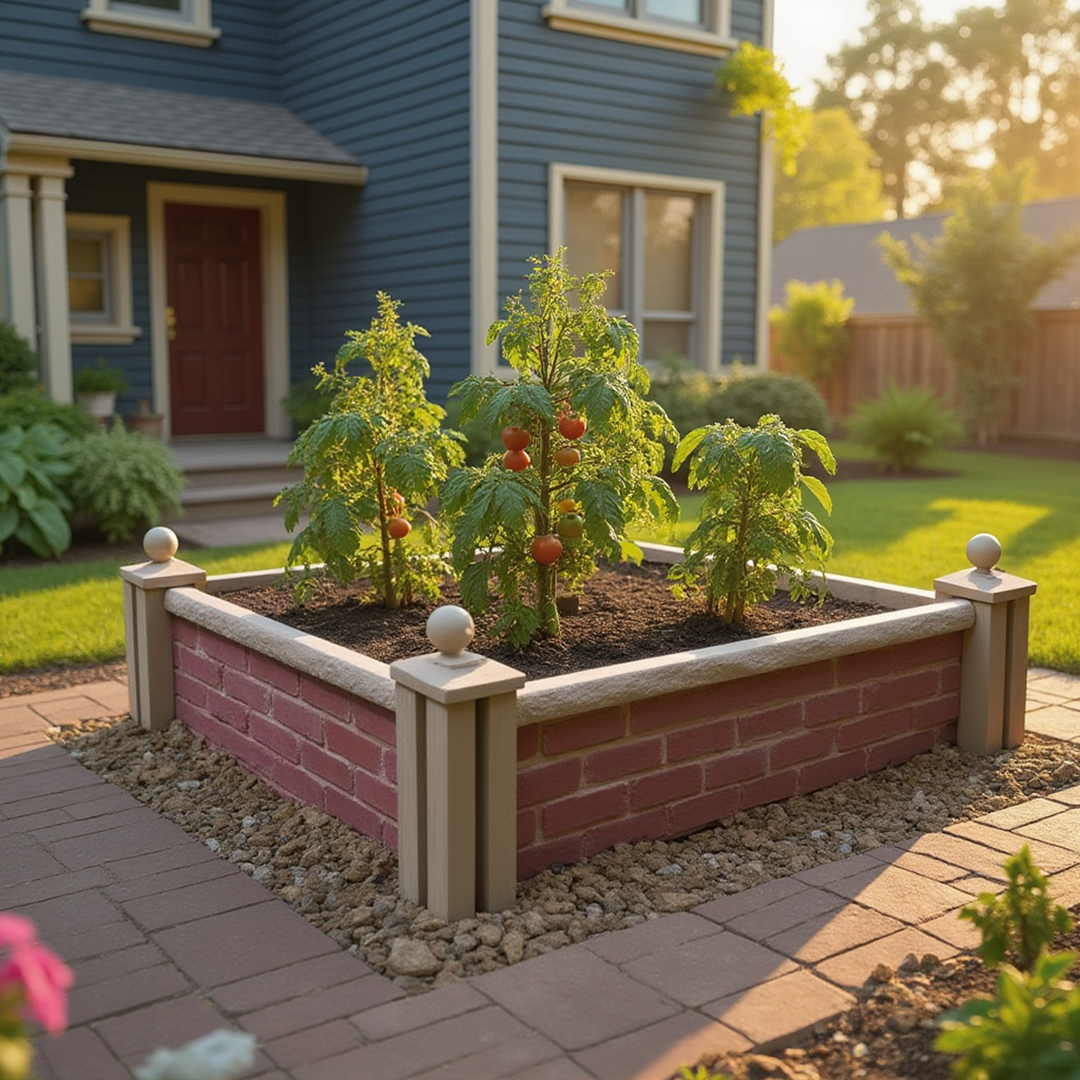
A raised garden bed that takes a mason two days to build block by block installs in under two hours. A culvert headwall needing a full day of stonework goes in during a morning.
The labor equation flips:
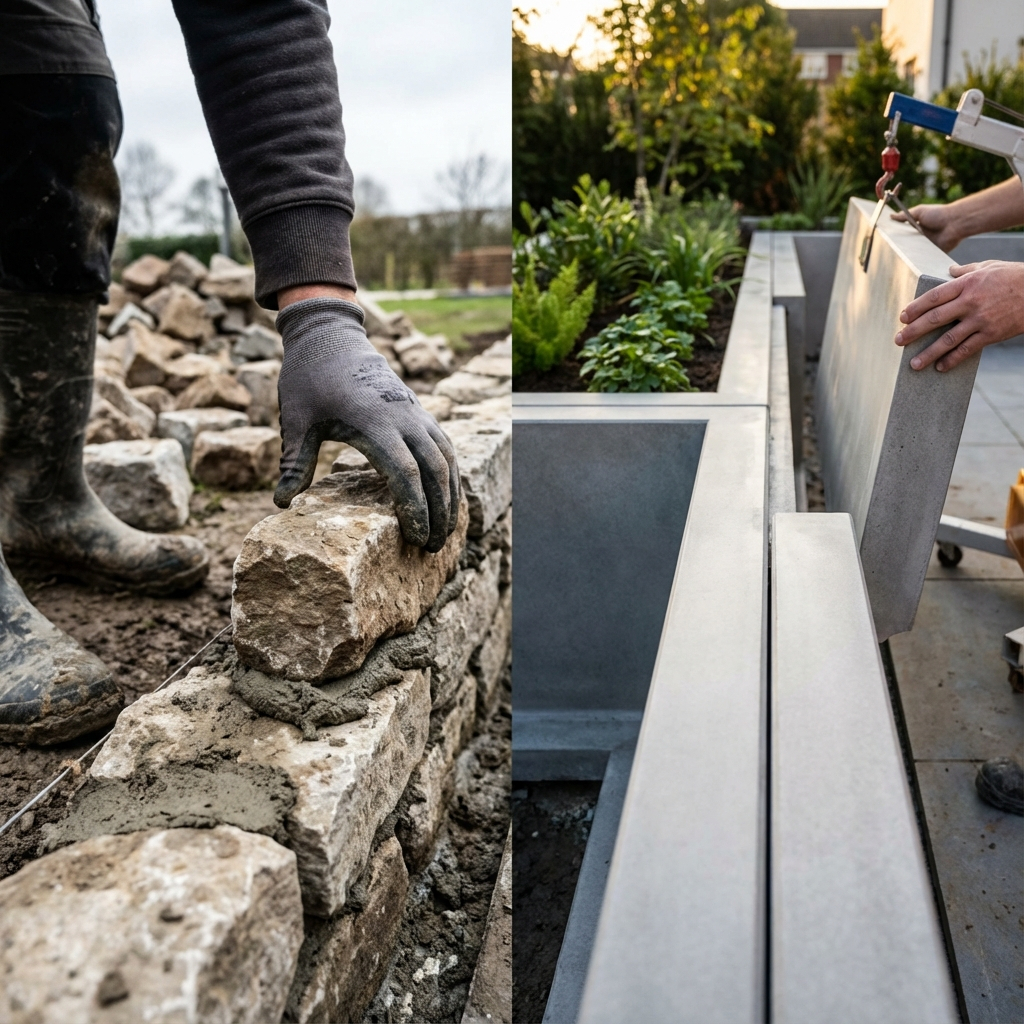
Traditional masonry needs skilled crews working on-site for extended periods, with weather delays and quality variations.
Precast GFRC needs small crews for short installation windows, with manufacturing completed off-site in controlled conditions and quality guaranteed before delivery.
Contractors gain predictability. They bid projects with confidence because labor hours become fixed instead of variable. Weather delays drop to near zero because installation happens fast.
The total cost of ownership advantage commercial construction has enjoyed for decades becomes available to residential landscapes.
Installation reality: GFRC installs in one-eighth the time with fixed labor costs and zero weather delays.
What About the Maintenance Factor Nobody Calculates?
Initial installation cost tells only part of the story.
Traditional masonry needs maintenance. Mortar joints deteriorate. Freeze-thaw cycles crack individual units. Water infiltration causes structural problems. You pay for repairs and replacements on a recurring schedule.
GFRC products are maintenance-free. The material doesn't rot like wood. It doesn't rust like metal. It doesn't crack like standard concrete. Freeze-thaw cycles have no effect.
We've tested GFRC landscape products for over three years under harsh conditions. The material performs exactly as ASTM testing predicts. Compressive strength holds at 12,500 psi. Flexural strength stays above 2,000 psi. No degradation.
You install once and forget about it for 50+ years.
The National Precast Concrete Association's 45% lower total cost of ownership for commercial buildings applies directly to residential landscapes when you factor in eliminated maintenance over the product lifetime.
Maintenance truth: GFRC needs zero maintenance over a 50+ year lifespan. Traditional masonry needs recurring repairs.
Why Does This Matter Now?
The landscape industry faces the same cost pressures that drove commercial construction to adopt precast technology decades ago.
Labor costs keep rising. Skilled masons become harder to find. Project timelines stretch longer. Weather delays impact more projects as climate patterns become less predictable.
Homeowners want beautiful outdoor spaces but struggle to justify the cost and time commitment of traditional construction methods.
Property managers need landscape features that look premium but need minimal maintenance budgets.
Landscape contractors need to control labor costs and schedule certainty to stay profitable.
The technology gap keeping precast concrete locked in commercial applications has closed. GFRC delivers the performance advantages commercial builders have relied on for 40 years in a material that works for residential landscape applications.
The products exist. The testing proves the performance. The installation economics work.
What took so long was figuring out how to make commercial-grade precast technology work in residential landscape contexts. This required engineering GFRC solutions light enough, beautiful enough, and thin enough for gardens and decorative features. We needed to maintain the durability and installation speed advantages that make precast concrete dominant in commercial construction.
We spent three years solving this problem. The solution brings 40 years of proven commercial construction technology into your backyard.
The timing: Rising labor costs, skilled worker shortages, and climate unpredictability make GFRC's commercial-grade advantages essential for residential landscapes.
What Changes When You Apply Commercial Solutions to Residential Problems?
I've seen landscape contractors transform their businesses when they switch from labor-intensive traditional methods to prefabricated GFRC products.
They bid more projects with confidence because labor hours become predictable. They complete installations faster and move to the next job. They eliminate callback visits for maintenance issues.
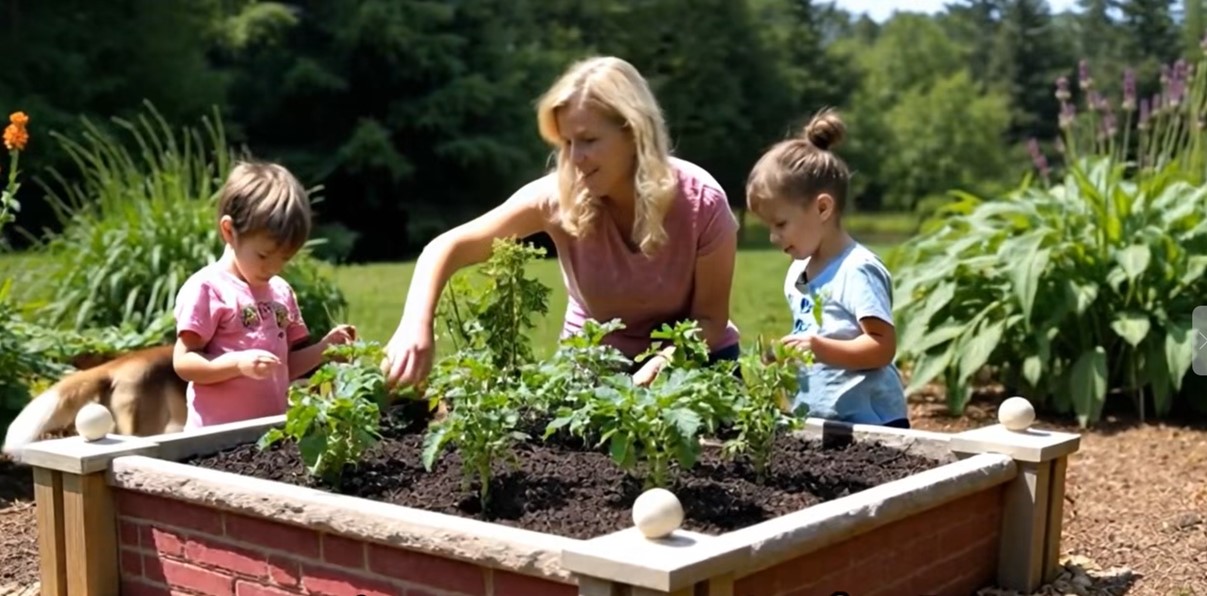
Homeowners get professional-grade results in a fraction of the time. A weekend project instead of a week-long construction zone. Raised gardens install Saturday morning and get planted Saturday afternoon.
Property managers reduce maintenance budgets and improve aesthetic appeal. Features look premium and need no ongoing attention.
The pattern repeats what happened in commercial construction when precast concrete replaced traditional masonry. Better results, lower costs, faster installation, minimal maintenance.
The technology gap existed because residential landscape applications needed material properties standard precast concrete couldn't deliver. GFRC provides those properties and maintains all the advantages that make precast dominant in commercial construction.
You get commercial-grade durability in residential-scale applications. Four times stronger than regular concrete. Immune to freeze-thaw cycles. Maintenance-free for 50+ years.
The building industry solved expensive masonry problems 40 years ago. This solution finally works for your landscape.
Frequently Asked Questions
What is GFRC and how is it different from regular concrete?
GFRC is concrete reinforced with glass fibers instead of traditional steel rebar. It's 75% lighter than standard concrete and delivers four times the strength at 12,500 psi vs 3,000 psi. The glass fibers distribute stress throughout the material, preventing cracks and enabling thin sections regular concrete won't handle.
Why didn't precast concrete work for landscapes before GFRC?
Standard precast concrete was too heavy (requiring cranes), lacked aesthetic beauty for visible applications, and cracked when cast thin enough for landscape features like raised beds. GFRC solved all three barriers by being lightweight, accepting stone-like textures and finishes, and maintaining strength in thin profiles.
How much faster does GFRC install compared to traditional masonry?
GFRC products install in one-eighth the time of traditional hand-laid masonry. A raised garden bed that takes a mason two days to build block by block installs in under two hours with GFRC. A culvert headwall needing a full day of stonework goes in during a morning.
What are the long-term maintenance requirements for GFRC landscape products?
GFRC requires zero maintenance over its 50+ year lifespan. The material doesn't rot like wood, rust like metal, or crack like standard concrete. It's immune to freeze-thaw cycles and resists moisture, temperature changes, and UV exposure without degradation.
How does GFRC compare in cost to traditional landscape masonry?
GFRC delivers 23-45% lower total cost of ownership compared to traditional masonry when you factor in faster installation, eliminated weather delays, and zero maintenance over the product lifetime. Initial material costs get offset by dramatic labor savings and maintenance elimination.
Who benefits most from GFRC landscape products?
Three groups benefit: Landscape contractors gain predictable labor costs and faster project completion. Homeowners get professional results in weekend timeframes instead of week-long construction zones. Property managers reduce maintenance budgets while maintaining premium aesthetics.
Will GFRC survive harsh winters and freeze-thaw cycles?
Yes. GFRC is engineered to withstand freeze-thaw cycles that destroy traditional concrete in northern climates. Three years of testing under harsh conditions shows zero degradation. The material maintains 12,500 psi compressive strength and 2,000+ psi flexural strength without cracking or spalling.
How proven is this technology in real-world applications?
GFRC itself has been used in commercial construction for decades. Homebridge Precast has tested GFRC landscape products for over three years under harsh conditions, with performance matching ASTM testing standards. The technology brings 40 years of proven commercial precast advantages into residential landscape applications.
Key Takeaways
Commercial construction solved expensive masonry problems 40 years ago by switching to precast concrete, cutting costs 23-45% and speeding installation 40-50%.
Residential landscapes stayed stuck with hand-laid methods because standard precast was too heavy, aesthetically limited, and too thick for landscape features.
GFRC bridges the 40-year technology gap by delivering 75% less weight, 4x strength (12,500 psi), and aesthetic versatility while maintaining commercial precast advantages.
Installation time drops to one-eighth of traditional masonry (days become hours) with fixed labor costs and zero weather delays.
Total cost of ownership drops 45% when factoring in faster installation, eliminated weather delays, and zero maintenance over 50+ year lifespans.
Labor predictability transforms contractor profitability while homeowners get weekend installations instead of week-long construction zones.
Three years of testing proves GFRC landscape products are immune to freeze-thaw cycles, require no maintenance, and maintain strength specifications without degradation.