Why I Spent Three Years Breaking My Own Products Before Selling a Single One
I founded Homebridge Precast in 2019 with a simple plan: design landscape products that wouldn't rot, crack, or fail like everything else on the market.
Then I did something that made zero business sense.
I spent three years testing prototypes before selling anything. I ran cars over culvert walls. I left raised garden beds exposed to Michigan winters. I pushed products to failure points that never came.
My business advisor thought I was insane. "You're burning capital on testing when you could be generating revenue."
He was right about the capital. Wrong about the insanity.
The Industry That Broke My Trust First
I learned the hard way what "durable" means in the construction industry.
Early in my career at Skanska Building and later at The Christman Company, I watched products fail. Not immediately. That would be too obvious. They failed three, four, five years after installation, right when the warranty expired and the contractor had moved on.
Freeze-thaw damage doesn't show up in year one. It becomes visible after three or four years, and in climates like Michigan with 90+ freeze-thaw cycles each winter, an unsealed concrete driveway lasts about seven years.
I also learned this lesson personally. I bought two wooden raised garden beds from Home Depot. Three years later, I looked out one spring and saw a sidewall collapsed, soil spilling across my lawn, weeds growing through cracked boards, and a post rotted through.
I had to replace an eyesore I'd created.
That moment stuck with me. Not because of the $75 I wasted, but because the entire system was designed for replacement, not durability.
The Testing Nobody Sees
When I started developing GFRC (glass fiber reinforced concrete) products, I knew the technical specifications looked impressive on paper.
12,500 psi compressive strength. Four times stronger than regular concrete.
Flexural strength over 2,500 psi. Concrete that could actually bend without breaking.
Immune to freeze-thaw cycles based on ASTM testing standards.
But I'd seen too many products with great specs fail in real-world conditions.
So I tested differently.
I installed culvert walls in my driveway and backed cars into them during snow removal. Repeatedly. No cracks. No spalling.
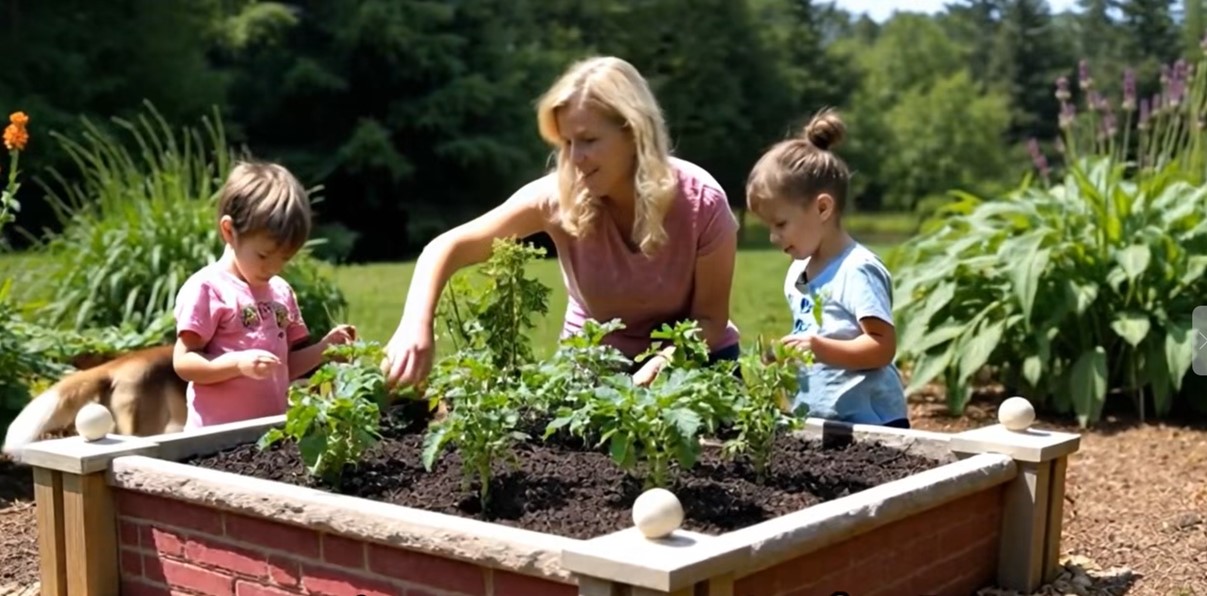
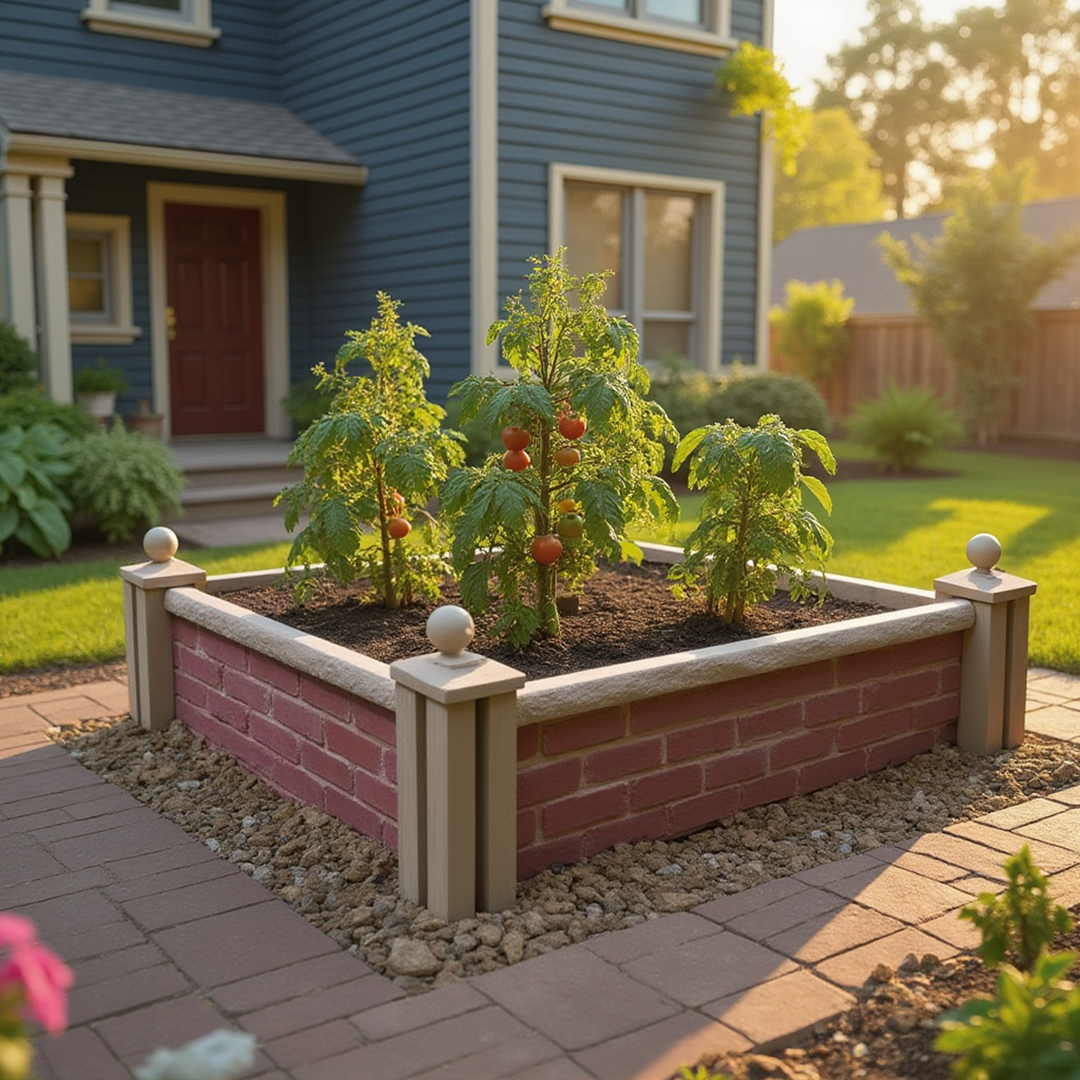
I left raised garden beds outside through three Michigan winters. Exposed. Unprotected. The freeze-thaw cycles that destroy regular concrete did nothing.
I was looking for the failure point. It never came.
The key wasn't just the compressive strength. It was the flexural strength that made the difference. Glass fibers create a matrix that allows the material to flex under impact instead of cracking. The fibers bridge cracks before they can propagate.
This wasn't my daddy's concrete.
The "Too Good to Be True" Problem
When I finally brought products to market in 2022, I ran into a different kind of resistance.
Skepticism.
People looked at the claims and thought I was exaggerating. One landscaper at a trade show insisted I was gluing stones onto panels. He couldn't believe they were one-piece casts from real stone molds.
"This can't last 50 years," customers would say. "Nothing lasts 50 years."
They were right to be skeptical. The construction industry has broken trust repeatedly with premature product launches and overpromised durability.
That's exactly why I spent three years testing.
I needed proof that would stand up to scrutiny. Not marketing claims. Actual performance data backed by independent standards like ASTM C947 for flexural strength, ASTM C109 for compressive strength, and ASTM C666 for freeze-thaw resistance.
When someone says "too good to be true," I show them the test results. Then I show them the products still sitting in my driveway after three years of abuse.
The skepticism flips when they can lift a panel, inspect it, and realize it's solid GFRC, not styrofoam or injection-molded plastic.
What Three Years of Testing Actually Revealed
The technical performance validated what I hoped for. But the testing revealed something I didn't expect.
The entire sustainability conversation in landscaping is backwards.
The industry obsesses over recyclable materials while ignoring lifecycle impact. Wooden raised garden beds are marketed as eco-friendly because wood is renewable.
But here's what actually happens: those beds need replacement every 5-7 years. Over a 20-year period, you're buying and installing three to four sets of wooden beds.
Each replacement cycle means more materials, more labor, more transportation, and more waste heading to landfills. The "recyclable" material ends up in dumps because few homeowners have machinery to shred it for mulch.
Meanwhile, GFRC raised gardens that last 50+ years get overlooked in sustainability conversations because they're not made from recycled content.
The lifecycle cost analysis is stark. Over 20 years, GFRC garden beds cost about 30% of what you'll spend on wooden beds when you factor in replacement materials and labor.
The environmental cost nobody calculates is even more dramatic.
The Labor Equation Nobody Talks About
Prefabrication changed the installation math entirely.
Traditional landscape construction requires four-person crews, heavy equipment, foundation excavation, and hauling spoils. A raised garden installation might take a full day.
Our GFRC products install in one-eighth the time with a two-person crew. No heavy equipment. No foundation digging. No hauling waste.
That speed isn't just convenient. It's an environmental factor that never shows up on sustainability scorecards.
Think about what you're eliminating: diesel fuel for excavators, emissions from hauling trucks, labor hours that multiply the carbon footprint of every installation.
Prefabrication can reduce construction time by 50% and cut costs by 20%. Our one-eighth installation time falls within that validated range.
Landscape architects and contractors are just starting to understand this advantage. The smaller carbon footprint comes from eliminating the entire cycle of excavation, installation, and eventual replacement.
The Economic Incentive That Works Against Sustainability
I learned something uncomfortable during my value analysis certification through the Society of American Value Engineers.
The system rewards short-term thinking.
When I talk to contractors about lifecycle costs, they push back in revealing ways. "I'm aging and may not be around in 20 years," they say. Or, "I'm in a budget crunch and can only look at initial cost."
They're being honest about how the industry measures success.
If your client is a developer planning to sell the project after completion, optimizing for initial cost makes economic sense. You're not around to deal with the replacement cycle.
But if your client is institutional or governmental, lifecycle analysis becomes critical. Some organizations like the GSA are starting to evaluate products based on total cost of ownership.
It's a good trend because it pays off for taxpayers in the long run.
The challenge is educating buyers stuck in the initial-cost mindset. Homeowners are trained to think about upfront price only. They'll finance a water heater without hesitation because it's a necessity, but they balk at financing landscape improvements that add visible curb appeal.
The Property Value Conversation We Should Be Having
When I tell homeowners that GFRC raised gardens are an investment in their property, I'm not using marketing language.
The data backs it up.
Professional landscaping can boost home resale value by 15-20%. For a $400,000 house, that's potentially $80,000 in added value.
Studies show landscaping improvements yield ROI between 100% and 400%, depending on the project. Research from Virginia Tech found well-designed landscaping could increase home value by 5.5% to 12.7%.
But here's what homeowners don't calculate: the compounding effect of durability.
A wooden raised garden bed costs $75. You'll replace it three times over 20 years. Add labor at $50 per hour for installation, and you're looking at $1,500 total.
Our GFRC raised gardens cost $700 each plus installation and shipping, totaling around $2,100 for a pair.
The upfront sticker shock makes people hesitate. But that $2,100 investment lasts 50+ years while adding property value the entire time.
The wooden beds depreciate. The GFRC beds appreciate as part of your property's landscape value.
That's the conversation we need to normalize: landscape elements as property investments, not yard decorations.
What Breaking Trust Looks Like in Real Time
The hardest part of bringing durable products to market isn't the engineering.
It's overcoming the broken trust from decades of products that failed to deliver on promises.
When customers ask if GFRC is "too good to be true," they're telling me about every landscape product that disappointed them. Every wooden bed that rotted. Every concrete element that cracked. Every "lifetime warranty" that disappeared when the company went out of business.
I can't blame them for skepticism.
The construction industry has earned that distrust through premature product launches, overpromised durability, and planned obsolescence disguised as affordability.
That's why the three-year testing period wasn't paranoia. It was the antidote to an industry that's broken buyer trust repeatedly.
I needed proof that would survive scrutiny from early adopters who've been burned before.
The flip happens when they see the evidence. When they lift a panel and realize it's solid GFRC, not cheap plastic. When they learn about ASTM certifications that provide third-party validation. When they understand that cars backing into culvert walls without damage isn't a marketing claim but documented performance.
The Education Gap Nobody's Filling
I don't think a lifecycle mindset is going to become prominent without active education.
The market won't figure this out on its own. There's too much economic incentive to maintain the current system of cheap materials and frequent replacement.
Contractors make money on repeat business. Big box stores profit from selling the same customer wooden beds every five years. Manufacturers optimize for production volume, not product longevity.
Breaking that cycle requires showing customers what's possible and letting them make informed decisions.
We tell contractors: give customers more options. Explain the lifecycle cost difference. Present the durability data. Then let them choose.
Some will still pick the cheaper option. Budget constraints are real, and not everyone has liquid funds for upfront investment.
But many customers, when they understand the full picture, choose differently. They finance the purchase through our online store and treat it like any other property improvement.
The shift happens when you stop gatekeeping information and start trusting customers to evaluate value for themselves.
What Changes When Durability Becomes the Standard
GFRC already earns construction teams a LEED certification point for innovation. I expect that trend to continue as more information reaches the market.
But the real change won't come from certification systems alone.
It will come from customers who experience the difference between products designed for replacement and products designed to last.
When you install a raised garden that's still perfect after 10 years while your neighbor is on their third wooden replacement, you understand the value proposition differently.
When landscape architects see installation time drop from a full day to a few hours, they start designing projects differently.
When property managers calculate maintenance budgets over 20-year horizons, they make different purchasing decisions.
The early adopters are paving the way for mainstream acceptance. That's how innovation adoption curves work.
You need people willing to try something new before the majority follows.
We're currently selling to those early adopters. The average buyer will click when they see lots of other people choosing these products.
Why I'd Do It Again
Three years of testing before generating revenue was expensive.
It delayed market entry. It burned capital. It tested my patience and my business advisor's faith in my judgment.
But I'd make the same decision again.
Because the alternative is contributing to an industry that prioritizes speed to market over product integrity. That values marketing claims over engineering proof. That asks customers to trust promises instead of providing evidence.
I spent 20+ years in construction watching that approach fail. I saw products that looked great in catalogs but cracked in real-world conditions. I watched homeowners replace the same failing elements repeatedly because nobody offered a better option.
When I looked at those collapsed wooden garden beds on my lawn, I didn't just see a product failure.
I saw a system failure.
The entire industry was optimized for replacement cycles instead of durability. For initial cost instead of lifecycle value. For recyclable materials instead of products that never need recycling because they never fail.
Homebridge Precast exists to offer a different option.
Products tested until failure points never came. Materials engineered for 50+ year lifespans. Prefabricated elements that install in hours and add property value for decades.
You can finance them through our online store and treat them like any other property investment. Or you can keep buying cheap replacements every few years.
The choice is yours. But now you have the information to make it.
That's what three years of testing bought: the credibility to have this conversation honestly.