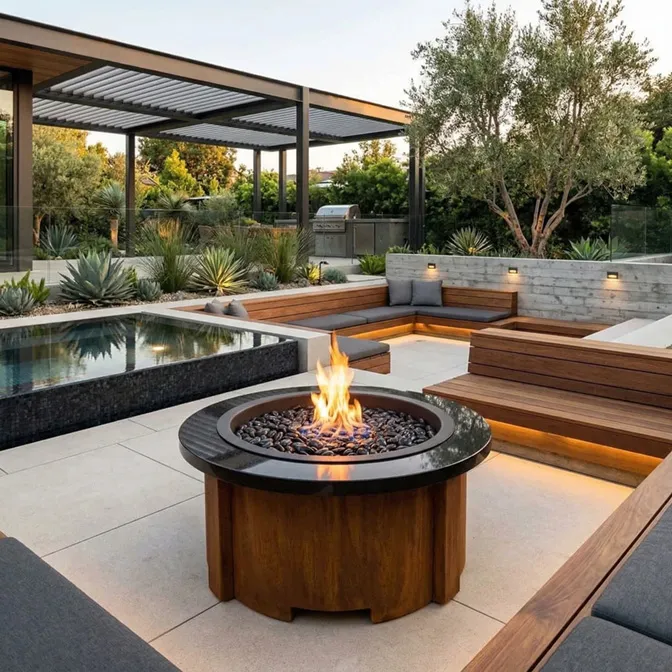
Why Your Fire Pit Needs to Handle 400°F Without Cracking (And Why Standard Concrete Fails)
GFRC (Glass Fiber Reinforced Concrete) withstands 400°F open flame heat and freeze-thaw cycles without cracking, while standard concrete fails within the first three seasons. With 12,500 psi compressive strength (3x stronger than regular concrete) and a 50+ year lifespan, GFRC fire pits require zero maintenance or seasonal storage.
Why GFRC Outperforms Standard Concrete:
Compressive strength: 12,500 psi vs. standard concrete's 3,000-4,000 psi
Flexural strength: 2,000+ psi prevents thermal cracking
Dense, non-porous matrix blocks water penetration and freeze-thaw damage
Alkali-resistant glass fibers stop crack propagation at the molecular level
Tested to 400°F with zero surface damage, spalling, or discoloration
I've spent three years testing landscape materials in conditions that destroy most outdoor products. Freeze-thaw cycles. Open flame heat. Thermal shock from snow to summer sun.
Testing revealed something important: the material matters more than the design.
Standard concrete looks solid. It feels permanent. Expose it to real-world thermal stress and you'll see hairline cracks within the first season. By year two, spalling and surface deterioration compromise the structure.
Glass Fiber Reinforced Concrete (GFRC) solves this problem at the molecular level.
What Is Thermal Stress and Why Does It Crack Concrete?
When you light a fire in your backyard, the concrete surrounding that flame experiences extreme temperature gradients. The surface heats rapidly while the interior stays cool. This creates internal stress.
Standard concrete responds to this stress by cracking.
The material has compressive strength between 3,000 and 4,000 psi. That sounds impressive until you understand what happens during thermal expansion. Concrete expands when heated. When it doesn't expand uniformly, it fractures.
GFRC handles this differently.
Our GFRC formulation achieves compressive strength of 12,500 psi. That's more than three times stronger than standard concrete. Strength alone won't prevent thermal cracking, though. The real advantage comes from the fiber reinforcement network.
Bottom line: Thermal stress cracks standard concrete because it expands unevenly under heat. GFRC's fiber network and superior strength prevent this failure.
How Do Glass Fibers Prevent Crack Propagation?
Alkali-resistant glass fibers create a three-dimensional reinforcement matrix throughout the concrete. When thermal stress creates micro-cracks, these fibers bridge the gaps and redistribute tensile forces across the panel.
Standard concrete is a single rigid structure. GFRC is a composite material that flexes under stress.
The flexural strength exceeds 2,000 psi. GFRC absorbs bending stress from ground movement, thermal expansion, and structural load without developing the surface cracks that plague traditional concrete.
The fibers stay dimensionally stable within the high-pH cement matrix. They don't dissolve. They don't degrade. They maintain structural integrity across temperature extremes.
Key insight: Glass fibers act as a bridge network that redistributes stress and prevents cracks from spreading through the material.
How Does GFRC Perform Under Open Flame Heat?
I tested GFRC fire pit tables with open flame heat up to 400°F. No surface damage. No spalling. No discoloration.
This is verifiable data. The alkali-resistant glass fibers used in GFRC don't melt or deform under typical atmospheric heat. The concrete matrix withstands high surface temperatures without cracking or degrading.
GFRC also has low thermal conductivity, which reduces internal heat buildup. The material doesn't transfer heat the way metal does. It maintains dimensional stability when exposed to direct flame.
For you: no seasonal covering, no treatment, no storage. Your fire pit stays outside year-round without maintenance.
Practical takeaway: GFRC fire pits handle 400°F without damage and need zero maintenance or winterization.
Why Does Freeze-Thaw Damage Destroy Standard Concrete?
Cold weather creates a different kind of thermal stress.
When water penetrates concrete's porous structure and freezes, it expands by 9%. This creates internal pressure that causes micro-cracks. Because concrete is porous like a sponge, its pores pop when frozen water expands. This leaves larger empty pockets that absorb even more water during the next cycle.
This repeated expansion generates crystallization pressure up to 10.9 MPa. That greatly exceeds standard concrete's failure stress of 0.374 MPa.
GFRC prevents this damage through its dense, polymer-modified matrix with low porosity. Water doesn't penetrate. Without water penetration, you eliminate freeze-thaw damage.
What you need to know: Standard concrete is porous and absorbs water that expands when frozen, creating cracks. GFRC's dense matrix blocks water penetration entirely.
What Does ASTM C666 Testing Reveal About GFRC Durability?
We tested GFRC under ASTM C666, the standard method for evaluating concrete's resistance to rapid freezing and thawing cycles. The test involves rapidly repeated cycles between freezing and thawing in water.
GFRC samples showed only slight surface flaking after 300 cycles. Unreinforced mortar showed severe deterioration after only 200 cycles.
The test uses Procedure A, which is the more aggressive of the two testing methods. A minimum durability factor of 90 at 300 cycles is typically required for demanding applications. GFRC exceeds this threshold.
This is verifiable material science, not marketing language.
Test results: GFRC survives 300+ freeze-thaw cycles with minimal surface effects, while standard concrete fails after 200 cycles.
What Is the Expected Lifespan of GFRC in Extreme Weather?
GFRC building facades have endured hurricanes. Modified GFRC panels are certified to Dade County Category 4 Hurricane rating. They absorb the impact of a 27 lb. 2×4" stud propelled at 120 mph without failure.
The Harrah's Poydras Street hotel in New Orleans suffered minimal damage to installed GFRC panels when Hurricane Katrina hit.
Laboratory tests show no surface deterioration after the equivalent of fifty years service in weather typical of the northern U.S. When manufactured to specification and installed correctly, GFRC achieves a service life of 50 years or more in demanding environments.
This longevity comes from the material's fundamental properties: high compressive strength, superior flexural strength, freeze-thaw resistance, and thermal stability.
Proven durability: GFRC delivers 50+ year service life in extreme conditions, backed by hurricane-rated certifications and laboratory testing.
Why Should Landscape Contractors Choose GFRC?
Your clients ask about durability. They want to know if outdoor products will survive Michigan winters or summer heat.
GFRC provides a concrete answer.
The material specifications tell the story:
12,500 psi compressive strength vs. standard concrete's 3,000-4,000 psi
2,000+ psi flexural strength prevents cracking under thermal stress
ASTM C666 freeze-thaw testing confirms resistance to 300+ cycles
400°F heat tolerance for fire pit applications without surface damage
50+ year expected lifespan in extreme weather conditions
These are tested specifications. We've tested these products for over three years under real-world conditions.
For contractors: GFRC's verified performance specs give you credible answers to client durability questions and eliminate callback concerns.
How Does Prefabrication Solve Labor Variability?
GFRC products are prefabricated. Installation takes one-eighth the time compared to standard methods.
For landscape contractors, this solves the labor variability problem. You control project timelines. You reduce on-site construction time. You deliver consistent quality without depending on field conditions.
Controlling labor is the challenge every contractor faces. GFRC addresses this through manufacturing precision and installation efficiency.
Installation advantage: Prefabricated GFRC installs 8x faster than traditional methods, giving contractors predictable timelines and consistent quality.
How Does Material Science Translate to Real-World Performance?
I founded Homebridge Precast to bring value-added products to homeowners, property managers, and designers. The use of GFRC is about solving real problems with engineered materials, not following trends.
Standard concrete fails under thermal stress. GFRC doesn't.
Standard concrete absorbs water and cracks during freeze-thaw cycles. GFRC prevents water penetration.
Standard concrete requires ongoing maintenance and eventual replacement. GFRC delivers 50+ years of maintenance-free performance.
The material difference is measurable, testable, and verifiable.
Material comparison: GFRC solves every failure point of standard concrete through superior engineering and verified testing.
What Should You Specify for Your Next Outdoor Project?
When you specify materials for outdoor applications, you're making a 50-year decision.
GFRC offers durability that standard concrete doesn't match. The fiber reinforcement network prevents crack propagation. The dense matrix eliminates freeze-thaw damage. The thermal stability handles extreme temperature swings without surface degradation.
This is what engineered materials look like in practice.
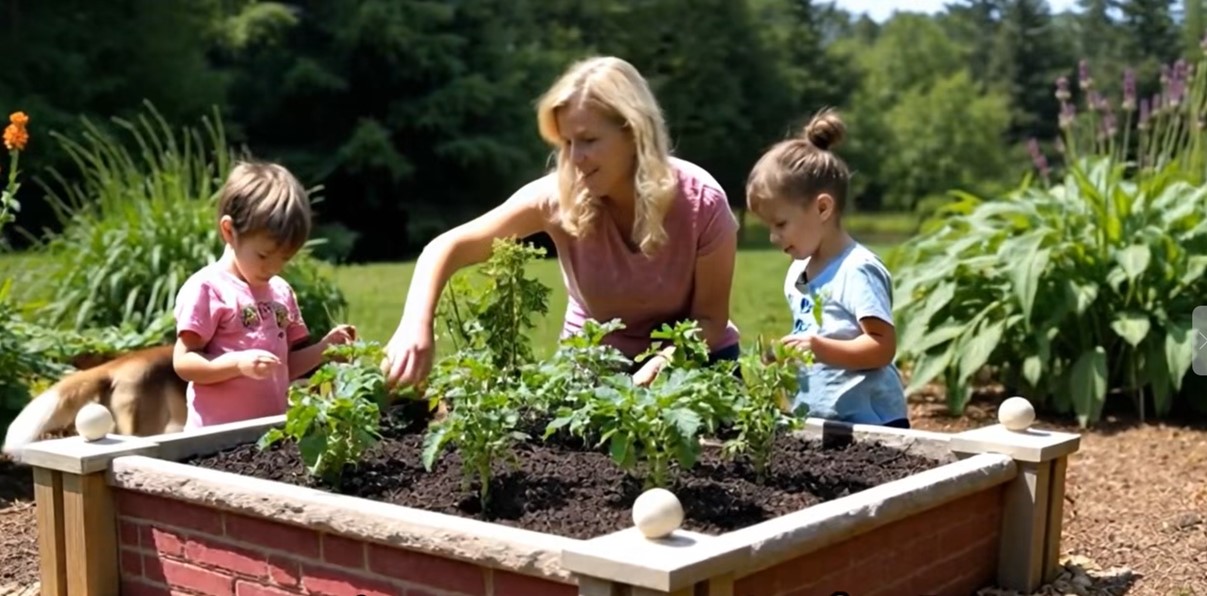
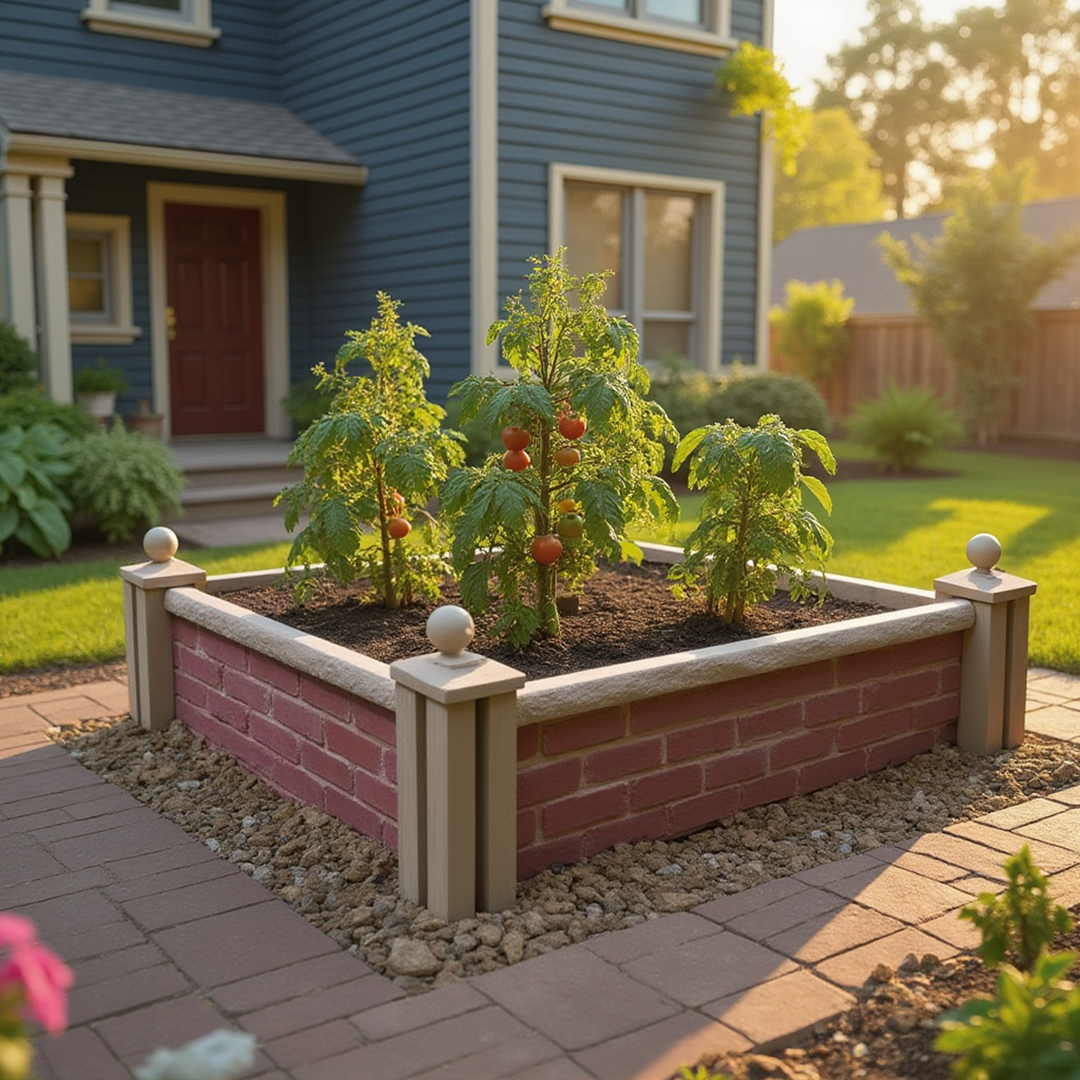
We manufacture culvert walls, raised gardens, fire pits, and garden retaining walls using GFRC formulations tested under ASTM standards. Each product delivers the same material advantages: high strength, freeze-thaw resistance, and long-term durability.
Your clients want products that last. GFRC gives you the technical specifications to back up that promise.
Frequently Asked Questions
What makes GFRC stronger than standard concrete?
GFRC achieves 12,500 psi compressive strength (vs. 3,000-4,000 psi for standard concrete) through its alkali-resistant glass fiber reinforcement network and polymer-modified cement matrix. The fibers create a three-dimensional structure that redistributes stress and prevents crack propagation.
Will a GFRC fire pit crack in winter cold?
No. GFRC's dense, non-porous matrix prevents water penetration. Without absorbed water, there's no freeze-thaw damage. Testing under ASTM C666 shows GFRC survives 300+ freeze-thaw cycles with only minor surface effects.
How hot does a fire pit get and will GFRC handle it?
Open flame fires reach 400°F at the surface. GFRC fire pits tested at this temperature show no surface damage, spalling, or discoloration. The alkali-resistant glass fibers don't melt or deform under atmospheric heat, and the low thermal conductivity prevents internal heat buildup.
Does GFRC require seasonal maintenance or covering?
No. GFRC products stay outside year-round without treatment, covering, or storage. The material's thermal stability and water resistance eliminate maintenance requirements.
How long will a GFRC fire pit last?
GFRC delivers a 50+ year service life in extreme weather conditions. This is backed by laboratory testing showing no deterioration after the equivalent of 50 years in northern U.S. weather, plus real-world performance data from GFRC building facades that survived Category 4 hurricanes.
What testing validates GFRC's durability claims?
GFRC undergoes ASTM C666 freeze-thaw testing (300+ cycles), compressive strength testing (12,500 psi verified), flexural strength testing (2,000+ psi verified), and open flame heat testing (400°F). Modified GFRC panels hold Dade County Category 4 Hurricane certification.
How does GFRC installation compare to traditional concrete work?
GFRC products are prefabricated and install in one-eighth the time of traditional methods. This reduces labor variability, shortens project timelines, and delivers consistent quality regardless of field conditions.
Is GFRC the same as fiberglass?
No. GFRC is Glass Fiber Reinforced Concrete, which uses alkali-resistant glass fibers embedded in a high-strength cement matrix. Fiberglass is a plastic composite. GFRC combines concrete's compressive strength with fiber reinforcement for superior thermal and structural performance.
Key Takeaways
GFRC delivers 12,500 psi compressive strength and 2,000+ psi flexural strength, preventing thermal cracking that destroys standard concrete within the first season.
The dense, non-porous matrix blocks water penetration entirely, eliminating freeze-thaw damage verified through 300+ ASTM C666 test cycles.
GFRC fire pits handle 400°F open flame heat without surface damage, spalling, or discoloration, requiring zero seasonal maintenance or storage.
Alkali-resistant glass fibers create a three-dimensional reinforcement network that stops crack propagation at the molecular level.
Testing shows 50+ year service life in extreme weather, backed by hurricane certifications and real-world performance in Category 4 storms.
Prefabricated GFRC installs 8x faster than traditional methods, solving labor variability and delivering consistent quality for contractors.
All performance claims are verified through ASTM testing standards and documented field performance, not estimates or projections.
Visit homebridgepc.com to see how GFRC performs in real-world landscape applications. The material science backs up every claim.